New York Hospital Agrees to a $2.2 Million Penalty for Filming Patients without Authorization
 Imagine how traumatizing it might be to watching a TV show filmed in an emergency room, only to realize that the footage you are watching is of your husband’s death from the year before? This actually happened to Anita Chanko in 2012. The hospital that allowed the film crew from the ABC network program “NY Med” to film a reality TV series episode while her husband, Mark, was fighting for his life after having been hit be a garbage truck, New York-Presbyterian Hospital/ Weill Cornell Medical Center, has agreed to pay a $2.2 million penalty to federal regulators for filming two patients without their consent even after a medical professional urged the crew to stop filming.
In a New York Times article, The Office for Civil Rights (OCR) which is part of the U.S. Department of Health and Human Services, said, “It is not sufficient for a health care provider to request or require media personnel to mask the identities of patients (using techniques such as blurring, pixilation or voice alteration software) for whom an authorization was not obtained.” The Health Insurance Portability and Accountability Act (HIPAA) laws do not allow media to access a patient’s health care information without authorization.
In a statement on their website, the OCR found that New-York Presbyterian Hospital failed to safeguard protected health information and allowed ABC film crews virtually unfettered access to its health care facility, effectively creating an environment where PHI could not be protected from impermissible disclosure to the ABC film crew and staff. In addition to the $2.2 million penalty, the OCR will monitor the hospitals for two years helping to ensure that it remains compliant with HIPAA regulations.
The Office for Civil Rights seems to have seized this opportunity to send a loud and clear message about HIPAA protections and patient privacy.
Last year, ProPublica followed the family’s story in collaboration with the New York Times. Mr. Chanko’s son Kenneth, filed complaints with the hospital, the New York State Department of Health, ABC, a hospital accrediting group and the OCR. According to the Pro Publica story, the New York state health regulators did not impose any sanctions on the hospital. The lawsuit against ABC was dismissed by an appellate panel after parts of it had been approved by a state Supreme Court judge.
The family’s negligence lawsuit against the private garbage truck company that was responsible for Mr. Chanko’s death was resolved prior to Mrs. Chanko’s viewing of the episode of NY Med.
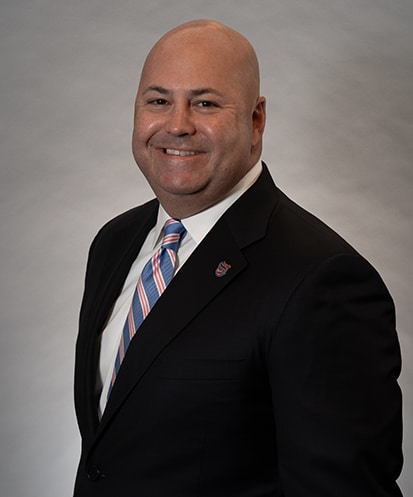
Christopher T. Nace works in all practice areas of the firm, including medical malpractice, birth injury, drug and product liability, motor vehicle accidents, wrongful death, and other negligence and personal injury matters.
Read more about Christopher T. Nace.