
Why Blind Spots Cause Truck Accidents
Holding truck drivers and trucking companies accountable for truck accidents in Washington, D.C.
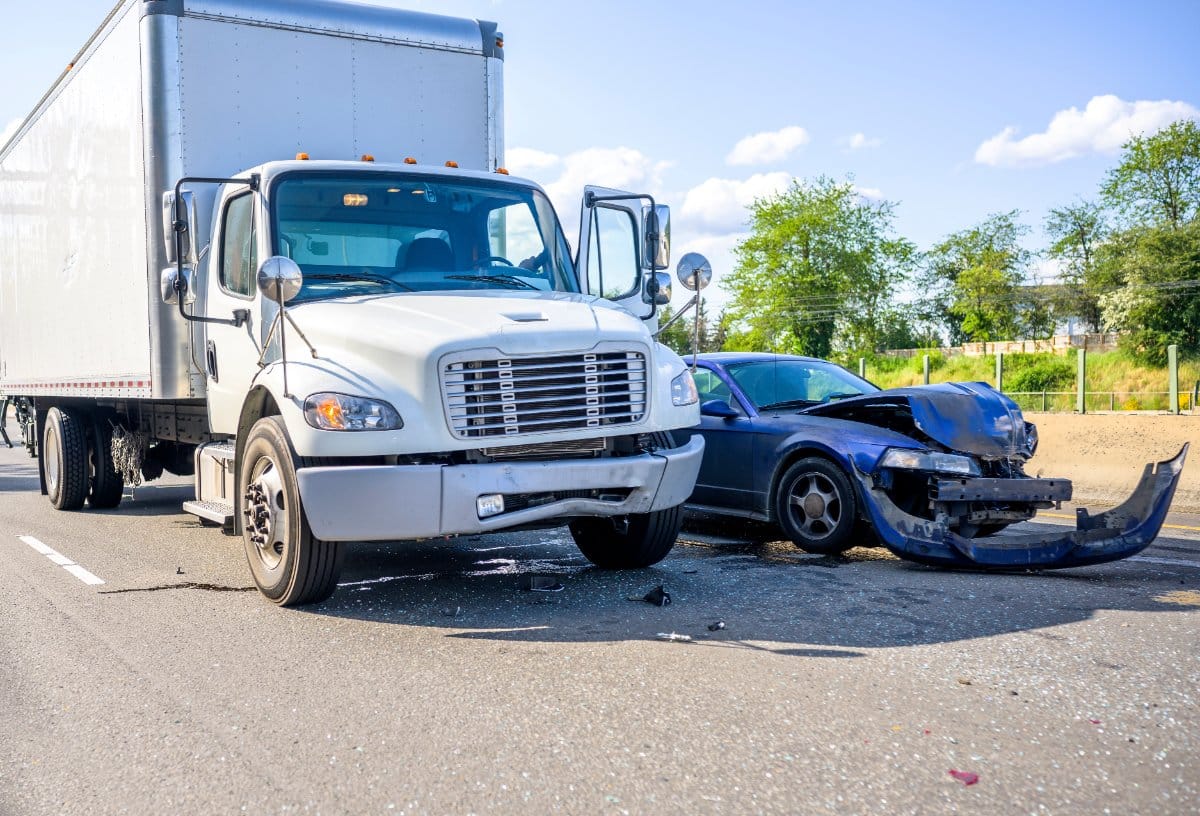 One of the reasons it’s hard to control trucks is that trucks have blind spots that make visibility around all sides of the truck difficult. It’s not just large tractor-trailers, semis, and rigs that have blind spots. Smaller box trucks, delivery trucks, and any type of enclosed truck have blind spots.
Whether a truck driver is traveling on I-295, I-395, US Route 1, or local D.C. roads in Georgetown and nearby areas, truck drivers need to understand where the truck’s blind spots are and what steps they should take to get better visibility in the rear, sides, and front of their trucks. To support safe operation, trucking companies must ensure their vehicles comply with federal rear-vision mirror requirements and may also choose to use additional visibility technology.
At Nace Law Group, our truck accident lawyers hold truck drivers and trucking companies accountable for preventable blind spot truck accidents.
What is a blind spot?
A blind spot is the area around a truck that the driver cannot see with their eyes or in the truck’s mirrors (typically the side mirrors). The longer and wider a truck is, the larger the blind spot. Truck drivers need to see around all sides of their truck before they can safely turn, change lanes, merge, back up, or enter/exit a highway.
Some of the concerns and dangers of blind spots are the following:
- The size of a blind spot becomes larger due to:
o The length of the truck and/or trailer
o The height of the cab
o The angle of the truck’s mirrors
o Rain or snow that can obstruct mirrors and sensors
- No-zones – areas where a car, motorcycle, truck, or pedestrian in the blind spot disappears from the driver’s view
o The right side of the truck, especially from the front passenger door to the rear wheels of the truck or trailer
o Approximately 20 to 30 feet or more directly behind the trailer, depending on vehicle configuration
o Directly in front of the truck, where the hood of the truck blocks the driver’s view
o The left rear quarter of the truck or tractor-trailer
What driving precautions can truck drivers take to prevent blind spot accidents in Washington, D.C.?
Some of the precautions that truck drivers and the owners of the trucks should take include the following:
- Leave a safe distance in front. Truck drivers should maintain a safe following distance so they can stop safely if the vehicle ahead (especially one outside their line of sight) stops suddenly.
- Be aware. Truck drivers should routinely check their mirrors and be aware of the position of vehicles to both sides of their truck, especially when preparing to change lanes.
- Use available safety technology when feasible. In addition to required mirrors, carriers may use cameras/sensors and other systems that can enhance visibility.
- Driver education. Trucking companies should train their drivers about how to anticipate and manage blind spots.
- Use a spotter. Truck drivers who back out into traffic should consider using a human spotter to direct their backing-out maneuvers.
- Use caution when changing lanes. Truck drivers should use their turn signals early, keep longer following distances, and give nearby vehicles time to clear out.
What precautions should truck owners, including fleet owners, take to reduce the risk of blind spot accidents?
At Nace Law Group, we can file truck accident claims against negligent truck drivers. We can also hold the owners of the trucks accountable if they fail to take reasonable steps to prevent blind spot truck accidents. These steps include:
- Investing in blind spot mirrors and blind spot technology
- Investing in dash cams with side views
- Educating their drivers about blind spots, no zones, proper mirror use, and safe merging techniques
- Using visual simulations to train drivers
- Conducting regular pre-trip inspections for damage to mirrors, sensors, and cameras
What precautions can drivers in Washington, D.C., who are near a large truck take to increase the ability of a truck driver to see their vehicle?
The Federal Motor Carrier Safety Administration (FMCSA) analyzes blind spots as follows:
- Standard driving blind spots. FMCSA warns that large trucks have significant blind spots along the sides, front, and rear of the vehicle where the driver may not be able to see other traffic.
- Blind spots during turns. When tractor-trailers turn, the tractor/cab and the trailer take slightly different paths. Drivers should give trucks extra room to complete their turn. It’s dangerous to be directly on the side of a truck that is turning.
- Blind spots when changing lanes. Be careful when moving in front of a truck (in the same lane as the truck). Trucks need more time and distance to stop.
- Be careful in construction zones. Construction zones generally have many large trucks at the construction site.
How should truck drivers use their mirrors and new technology to reduce the risk of blind spot accidents?
According to Star Mutual RRG, an insurance company, truck manufacturers and truck owners often recommend blind spot mirrors to help increase the truck driver’s vision. Some trucks may use hood- or fender-mounted convex mirrors to improve visibility, but federal rules generally require two rear-vision mirrors (one on each side) positioned to give the driver a view to the rear along both sides of the vehicle. These mirrors:
- Include wide-angle (convex) mirrors to extend the field of view.
- Are positioned to help maximize the driver’s field of vision.
- Can be positioned slightly outside regular side mirrors to monitor adjacent lanes.
Blind spot technology that can help reduce a truck driver’s blind spots includes the following:
- Cameras, sensors, radar, and software.
- Targets blind spots around the truck, including the sides and rear, depending on the system used.
What can I do if I’m involved in a truck accident in or near Washington, D.C.?
The injuries from such an accident are often severe, and the collision is more likely to be fatal than accidents with smaller vehicles. Injuries from truck blind spot accidents include traumatic brain injuries, spinal cord damage, loss of limb, fractures, nerve damage, back injuries, and many other serious injuries.
Our Washington, D.C., truck accident lawyers work to hold truck drivers, trucking companies, and truck manufacturers accountable when blind spot accidents cause injuries or deaths.
Contact us today if you were injured in a truck accident
Nace Law Group is here to help victims of truck accidents. Please contact us to schedule a free consultation. We handle truck accident claims on a contingency fee basis.

Samantha L. Peters, a lawyer specializing in medical malpractice and personal injury, joined Nace Law Group in 2022. She previously established a medical malpractice section at a Maryland firm. Licensed in Maryland and DC, she was listed in The National Trial Lawyers: Top 40 Under 40 and Top 100 Medical Malpractice Verdicts.