
What Jalen Hurts’ Blood Clots Teach the Rest of Us
 Updated October 23, 2026, with the NFL’s defense of the Eagles, the players’ union call for an investigation, Commissioner Goodell’s response, and Sen. Lisa Blunt Rochester’s letter to the league.
Jalen Hurts may be the best-protected patient in Philadelphia. He has team physicians, athletic trainers, imaging on demand, and a front office with every financial reason to keep him healthy. And still, a bruise on his calf turned into blood clots in both of his lungs in about two weeks.
The good news first: by every account, Hurts is going to be fine. His camp says his prognosis is very good and they expect a full recovery. But he is done for the 2026 season, and in the days since the diagnosis, his calf has become a league controversy, a labor dispute, and now a matter before a United States senator. His story is worth slowing down on. Not because of what it means for the Eagles, but because of what it says about a condition that kills tens of thousands of ordinary Americans every year, often after someone along the way decided it was nothing to worry about.
What happened
Based on public reporting from ESPN, the AP, and the Philadelphia Inquirer, the sequence looks like this:
1. October 4. Hurts takes a cleat to the calf in the Eagles’ game against the Rams.
2. October 8. He goes to the training room after practice, asks for treatment on the calf, and tells the medical staff he was cleated. He practices fully and travels with the team to London.
3. October 10. An ultrasound in London finds a superficial blood clot in his left calf, a superficial vein thrombosis. He is evaluated at a hospital the day before the game. The Eagles’ staff and London-based doctors conclude that activity and mobility are important and that he can safely play.
4. October 11. Hurts plays against the Jaguars in London, then takes the overseas flight home with the team. One report said he was awake for more than 30 hours before kickoff; the NFL disputes that and says he slept roughly seven to eight hours at the team hotel.
5. October 14. A follow-up ultrasound in Philadelphia shows the clot has moved. He sees several specialists, including a trip to Boston, and the team rules him out against the Panthers and places him on injured reserve.
6. October 19. The Eagles and his agent, Nicole Lynn, announce an updated diagnosis: deep vein thrombosis and bilateral pulmonary emboli. In plain English, a clot traveled from his leg into the arteries of both lungs. He will be on blood thinners for at least three months and cannot play contact football until he is off them.
7. October 20. The NFL publicly defends the Eagles’ medical staff and, according to reporting from The Athletic and the AP, will not discipline the team. That night, the NFL Players Association calls for a full investigation.
8. October 21. Commissioner Roger Goodell says the league welcomes a review. Sen. Lisa Blunt Rochester of Delaware sends Goodell a letter demanding answers.
Doctors have described the clot as “provoked,” meaning it has an identifiable cause, the cleat to the calf. That is part of why the long-term outlook is so good.
Why “superficial” is a dangerous word
The initial diagnosis sounded reassuring, and usually it would be. As ABC News medical correspondent Dr. Darien Sutton noted, clots near the surface of the skin rarely travel to the lungs. Rarely is not never. Superficial clots can extend into the deep veins, and once a clot is in the deep system, the path to the lungs is wide open. As one Temple Health pulmonary embolism specialist put it to the Inquirer, from the heart it is a “free highway to the lung.”
That is why this matters well beyond football. According to the CDC:
• Up to 900,000 Americans are affected by blood clots in the veins each year.
• An estimated 60,000 to 100,000 of them die.
• For about one in four people with a pulmonary embolism, the first symptom is sudden death.
• One-third to one-half of people who have a DVT live with long-term complications such as chronic pain and swelling in the leg.
Those numbers are not driven by NFL quarterbacks. They are driven by post-surgical patients, new mothers, people recovering from car accidents, cancer patients, and travelers. The CDC reports that more than a third of these clots are tied to a recent hospital stay, and most of those show up after the patient has gone home.
The questions people are asking
The Eagles are taking heat, and the questions are fair ones. Why was a player with a known clot cleared to play a contact game? Why did he board a long overseas flight home days after diagnosis? CBS News chief medical correspondent Dr. Jon LaPook said the bigger concern to him was not the lack of sleep but the flight there and the flight back within a few days. Prolonged travel and immobility are textbook risk factors for clots.
Head coach Nick Sirianni has declined to get into specifics and says he leans on the team’s medical experts. General manager Howie Roseman, who oversees the team’s medical department, has not spoken publicly. Through a source, Hurts’ own camp has praised Roseman as “exceptional” and hands-on throughout. Hurts himself has not commented.
The league has gone further. On October 20, NFL chief medical officer Dr. Allen Sills offered a forceful defense of the Eagles’ doctors, said Hurts received state-of-the-art imaging in London, and rejected the idea that football considerations influenced any medical decision. Asked about the flight home, Sills said whether someone with a clot can fly depends on several variables, including the patient’s history. League officials said they had been in contact with the Eagles and the Cleveland Clinic in London throughout.
Hours later, the NFL Players Association fired back. The union said it was not aware of any league investigation into Hurts’ care, that the league had told the union it did not plan to review that care, and that a full investigation had to come before anyone drew conclusions. The next day, Commissioner Roger Goodell said the league welcomes a review and the union has a right to ask for one. In the same breath, he said the league’s protocols were followed and downplayed the role of the international travel.
I want to be careful here. I have not seen Jalen Hurts’ medical records, and nobody outside his care team knows exactly what the doctors saw, weighed, or discussed with him. Medicine involves judgment calls, and the view from hindsight is always clearer than the view in the exam room. A bad outcome is not, by itself, proof that anyone did anything wrong.
But I have spent my career looking at cases where a blood clot was the story, and the questions here are the same ones I ask in every one of them. What risk factors were known? Was the patient told what symptoms to watch for? Did anyone account for the trauma, the travel, and the activity together? Was the follow-up timed to catch a clot that was growing or moving? Those are the right questions whether the patient is a Pro Bowl quarterback or a 58-year-old two weeks out of knee surgery.
On the league-versus-union fight, the union has the better of the process argument. You do not get to announce that care was appropriate and then agree to look at it. In my world, the order is the other way around: you collect the records, the imaging, the timeline, and who said what to whom, and only then does an independent expert decide whether the care met the standard. A defense delivered before the review is a conclusion in search of a record. The league may well turn out to be right. But it should prove it, not just say it.
“Did not end the way my husband’s did”
The most powerful voice in this story so far belongs to Sen. Lisa Blunt Rochester of Delaware. In a letter to Goodell on October 21, she asked how the situation was handled, what the league’s protocols for DVT and pulmonary embolism are, and requested a briefing for her office and the Senate committee on health, education, labor, and pensions.
For her, this is personal. Her husband, Charles Rochester, tore his Achilles tendon playing pickup basketball. Blood clots traveled to his heart and lungs, and he died at 52. She wrote that she is relieved Hurts’ story did not end the way her husband’s did, and that the NFL’s reach is a chance to prevent lost lives both in sports and outside of it. She has been pushing blood clot legislation, named for her husband, since she was in the House.
That is exactly the right frame. Charles Rochester was not a professional athlete with a team of doctors. He was a healthy man who got hurt doing something ordinary. That is the story of most of the families I meet in blood clot cases, and it is why this episode should be about more than one quarterback.
What the rest of us should take from this
Most of us will never have a team doctor on call. That makes it more important to know the basics.
Know your risk factors. Being young, fit, and healthy does not make you immune, as Dr. Sutton pointed out. Your risk goes up with:
• Recent surgery or a hospital stay, especially in the weeks after you go home
• A leg injury, even a bad bruise
• Long flights or car rides, and other long stretches of sitting still
• Pregnancy and the weeks after giving birth
• Cancer and cancer treatment
• A personal or family history of clots
Know the warning signs. In the leg: swelling, pain or tenderness, warmth, or redness, usually on one side. In the lungs: sudden shortness of breath, chest pain that worsens with a deep breath, a racing heart, or coughing up blood. Lung symptoms are an emergency. Call 911.
Ask the follow-up questions. If you are told you have a clot of any kind, or you are being sent home after surgery or an injury, ask:
• Is this clot superficial or deep, and how do you know?
• What is my plan if it gets bigger or moves?
• When is my follow-up scan?
• Should I be on a blood thinner?
• Is it safe for me to fly or take a long drive?
• What symptoms mean I should go straight to the ER?
If the answers do not make sense, get a second opinion. Hurts got a follow-up ultrasound four days after the first one, and it changed everything. Plenty of patients never get that second look.
The bottom line
Jalen Hurts caught a break. His clot was found, his doctors acted, and he is expected back at full strength. He will miss a season, not a lifetime.
Thousands of families every year are not that lucky. In my practice, I have seen what happens when a clot is labeled minor, a follow-up gets pushed back, or a patient is sent home without being told what to watch for. Blood clots are among the most preventable causes of death in American medicine. If one of the most closely watched athletes in the country can end up with clots in both lungs, the rest of us should take the warning signs seriously, ask the hard questions, and expect our doctors to take them seriously too.
Goodell says the league welcomes a review. Good. It should be independent, it should look at the whole chain of decisions from the training room in Philadelphia to the flight home from London, and its findings should be made public. If the NFL wants to turn this into something that saves lives, as Sen. Blunt Rochester urged, that is where it starts.
Wishing Jalen a full and speedy recovery.
Christopher T. Nace is a trial lawyer with Nace Law Group in Washington, DC, where he represents patients and families in medical malpractice cases. This post is for general information and is not medical or legal advice.
Sources
• ESPN: Jalen Hurts expected to miss season after blood clots discovered in QB’s lungs
• ESPN: NFLPA calls for ‘full investigation’ into medical care provided to Eagles’ Hurts
• AP via CBS Philadelphia: NFL commissioner welcomes review of how Eagles handled Hurts’ blood clots
• CNN: NFL defends Eagles medical staff after Hurts played in London with blood clot
• Sen. Lisa Blunt Rochester: Press release on letter to NFL Commissioner Goodell
• NBC Sports Philadelphia: A complete timeline of the Jalen Hurts blood clots situation
• Philadelphia Inquirer: Hurts’ pulmonary embolism, Philly specialists explain
• CBS News: What to know about Jalen Hurts’ condition
• Good Morning America: Eagles coach defends handling of Hurts’ diagnosis
• CDC: Data and Statistics on Venous Thromboembolism
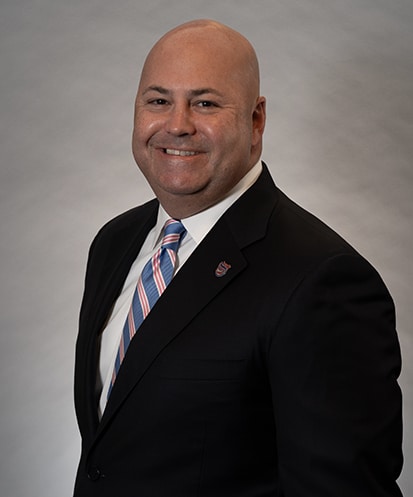
Christopher T. Nace works in all practice areas of the firm, including medical malpractice, birth injury, drug and product liability, motor vehicle accidents, wrongful death, and other negligence and personal injury matters.
Read more about Christopher T. Nace.