
What Makes Commercial Vehicle Accident Claims More Complicated Than Regular Car Accidents in D.C.?
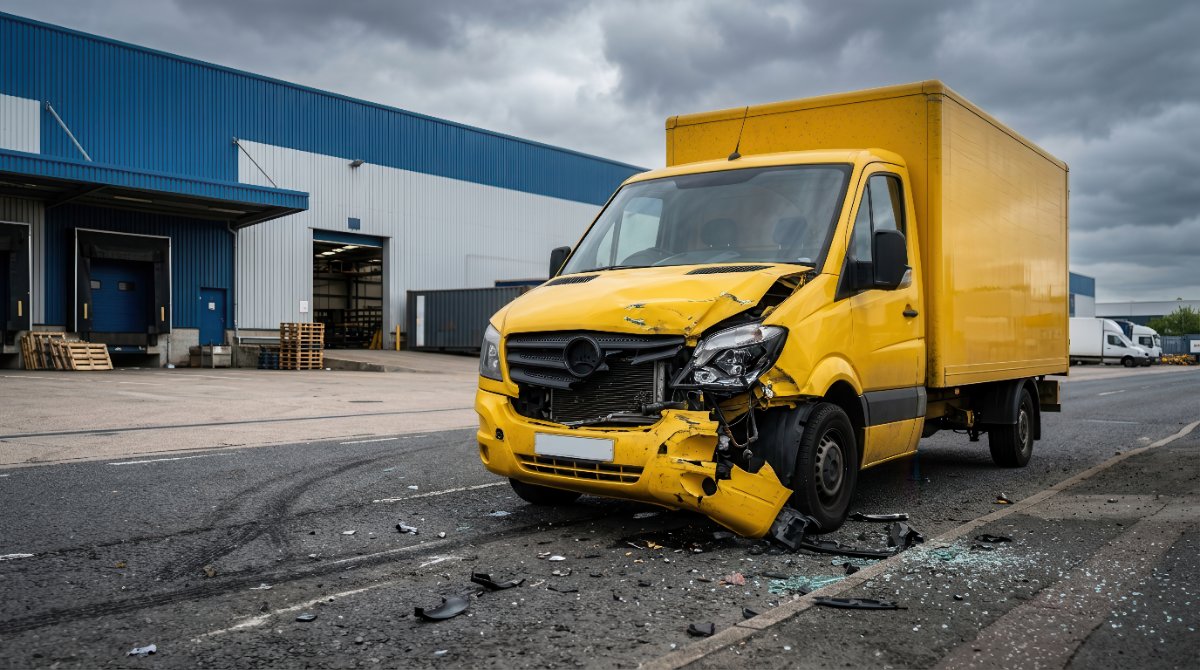 If you’re involved in a commercial vehicle crash in Washington, D.C., your claim may be more complicated than if you were in a typical car accident. For example, your injuries might be more severe due to the size and weight of the commercial vehicle. That adds complexity when calculating lost income, medical bills, permanent disability, and other variables.
In addition, commercial accidents often involve multiple potentially liable parties, multiple (and extensive) insurance policies, complex evidence that can disappear unless you move quickly to preserve it, and federal trucking regulations. A typical car accident often involves two drivers and their insurance policies. In either type of accident, a personal injury lawyer can help you understand the possible next steps.
Higher chances of severe injuries
A passenger car on the heavy side may weigh about 4,500 pounds. A relatively lightweight commercial vehicle, such as a delivery truck, may weigh several times as much, perhaps 25,000 pounds. Fully loaded tractor-trailers can tip the scales at 80,000 pounds. When combined with other variables common in commercial accidents, such as greater crash forces and longer stopping distances, serious injuries are more common.
Often, commercial vehicle accidents incur high medical bills and long-term care needs. Experts may need to weigh in on the full impact of these injuries, so you get the compensation you deserve. It is not always straightforward to assess the mental and financial costs of pain and suffering, long-term care, future lost income, and much more.
More potentially liable parties
Many parties may be responsible for a commercial accident, including the commercial vehicle driver, the driver’s employer, the vehicle owner, cargo loaders, and other third parties.
- Driver: Some commercial drivers work while tired, distracted, or intoxicated, or drive aggressively. They could be directly responsible for a crash, but are not necessarily the only liable party.
- The driver’s employer: Under vicarious liability, the driver’s employer, perhaps a trucking company, could bear some responsibility. Considerations include whether the driver was performing job duties at the time of the crash, if the company properly trained the driver, and if the company pressured the driver to rush.
- Vehicle owners: The owner of the commercial vehicle (or the leasing company or maintenance contractor) could bear some liability. Note that trucking companies are not always the owners of the vehicles.
- Cargo loaders and other third parties: If a cargo loading company loaded cargo improperly, perhaps causing it to shift or be overloaded, there could be liability. Potential other third parties could include freight brokers, logistics companies, vehicle or parts manufacturers, and even government entities. The latter could apply if dangerous road-maintenance conditions existed or if signage was poor.
Complicated regulations
Commercial vehicles and their drivers must follow several standards that regular vehicles and drivers do not have to follow. Federal Motor Carrier Safety Administration regulations cover issues such as driver training, drug testing, vehicle maintenance, and hours of service. If violations occurred in a commercial accident, they could help show negligence.
Washington, D.C., itself has regulations, too. If a vehicle does not follow safety or routing rules, this could be evidence in your case.
Insurance types and complexity
In a regular car accident, drivers typically have standard insurance with limited coverage. Meanwhile, insurance in commercial accidents can be more complicated due to the number of parties involved as well as the large insurance policies.
Larger policies do mean more potential compensation. They also mean more resistance is likely to avoid or reduce large payouts. Insurance companies often have investigators, adjusters, and legal teams working for them after a commercial vehicle crash. It can feel intimidating to go up against such deep teams, which is one reason why a personal injury lawyer on your side is helpful.
Pure contributory negligence in Washington, D.C.
There’s another twist to the puzzle that insurers often try to exploit. In many states, injured people can recover some amount of compensation as long as they are not more than 50% liable. Not so in D.C. If you are even just 1% liable, the D.C. contributory negligence rule may bar you from recovering damages. Thus, insurers investigate commercial vehicle accidents heavily to perhaps skew the fault picture. Your motor vehicle accident lawyer can try to counteract these claims with solid evidence.
In one scenario, the insurer might claim you caused a truck crash by abruptly changing lanes. However, your lawyer could challenge that assertion using traffic camera footage to show that the trucker ran a stop sign and hit your car.
Limited exceptions to pure contributory negligence do exist. They include the last clear chance doctrine. Bicyclists, pedestrians and other vulnerable road users may have additional protections, as well.
Technical evidence
Typical car accidents sometimes involve technical evidence such as black box data. In commercial accidents, there’s more evidence of this type to contend with. Without legal preservation letters or other quick action, it is at risk of being overwritten or otherwise disappearing.
- Electronic logging devices track commercial drivers’ activity and hours, and could indicate if a driver apparently drove while fatigued or violated federal hours-of-service regulations.
- Commercial maintenance and inspection records could pinpoint pre-existing mechanical issues on commercial vehicles.
- Black box data can show personal and commercial vehicles’ speed, brake use, seatbelt use, and much more.
High-level experts
Accident reconstruction specialists, trucking safety professionals, medical specialists, and economic experts who calculate damages may be involved in a commercial vehicle accident case. In a regular car accident claim, the evidence tends to be simpler (although it can still be technical) and relies more on police reports, photographs, and witnesses rather than deep technical analysis.
Contact Nace Law Group Accident & Injury Lawyers today
Many factors contribute to what makes commercial vehicle accident claims more complicated than regular car accidents in D.C. Nace Law Group Accident & Injury Lawyers are here to help. Contact us today to discuss your accident.

Christopher T. Nace works in all practice areas of the firm, including medical malpractice, birth injury, drug and product liability, motor vehicle accidents, wrongful death, and other negligence and personal injury matters.
Read more about Christopher T. Nace.